
Linsn L2 Sync/Async LED Player | HDMI, Wi-Fi, 650K Pixels
$ 108.00
Linsn L2 LED player with synchronous HDMI input, asynchronous program playback, Wi-Fi/LAN/USB transfer and a maximum LED load of 650,000 pixels.
10000 in stock
Product overview
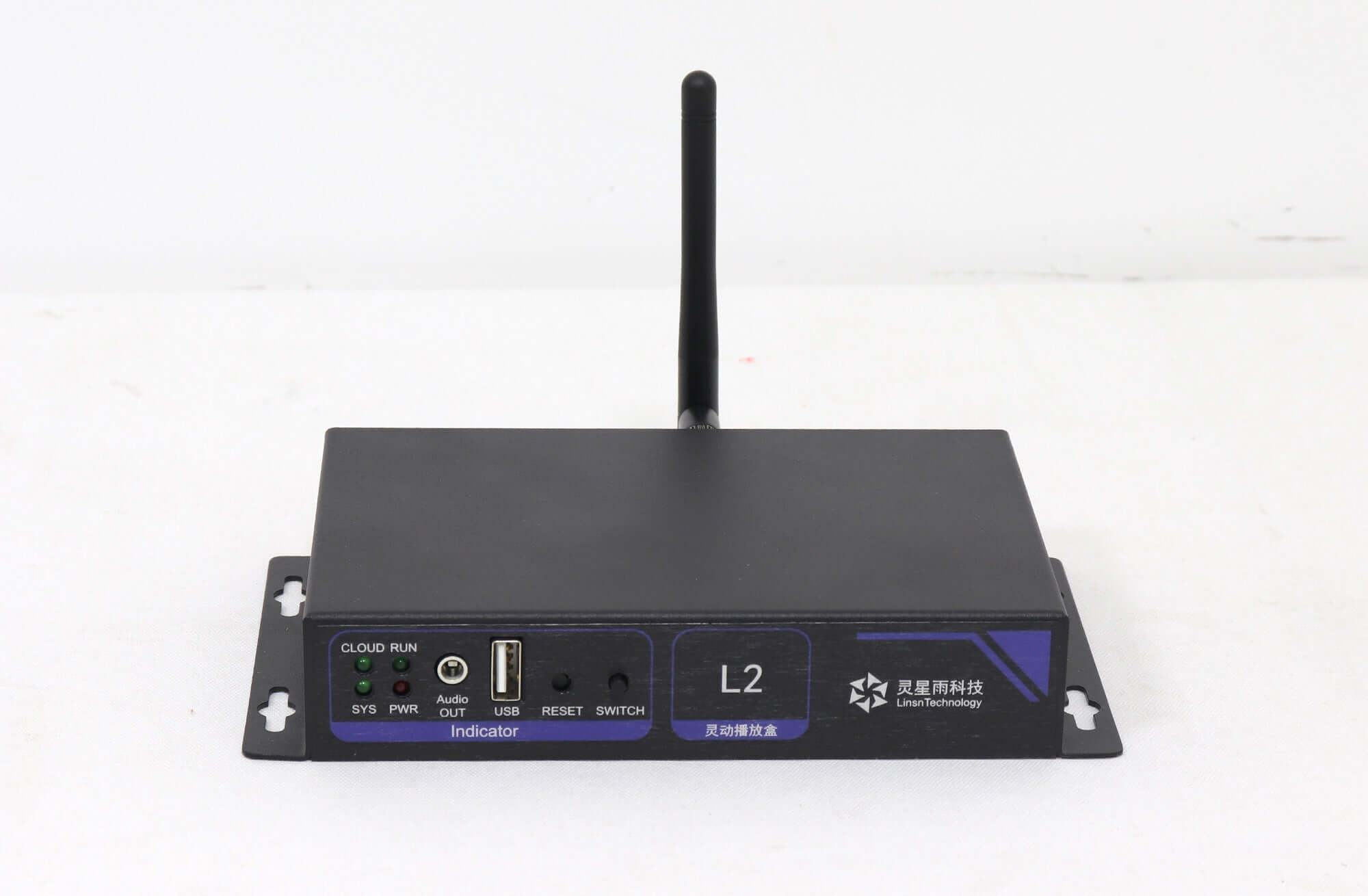
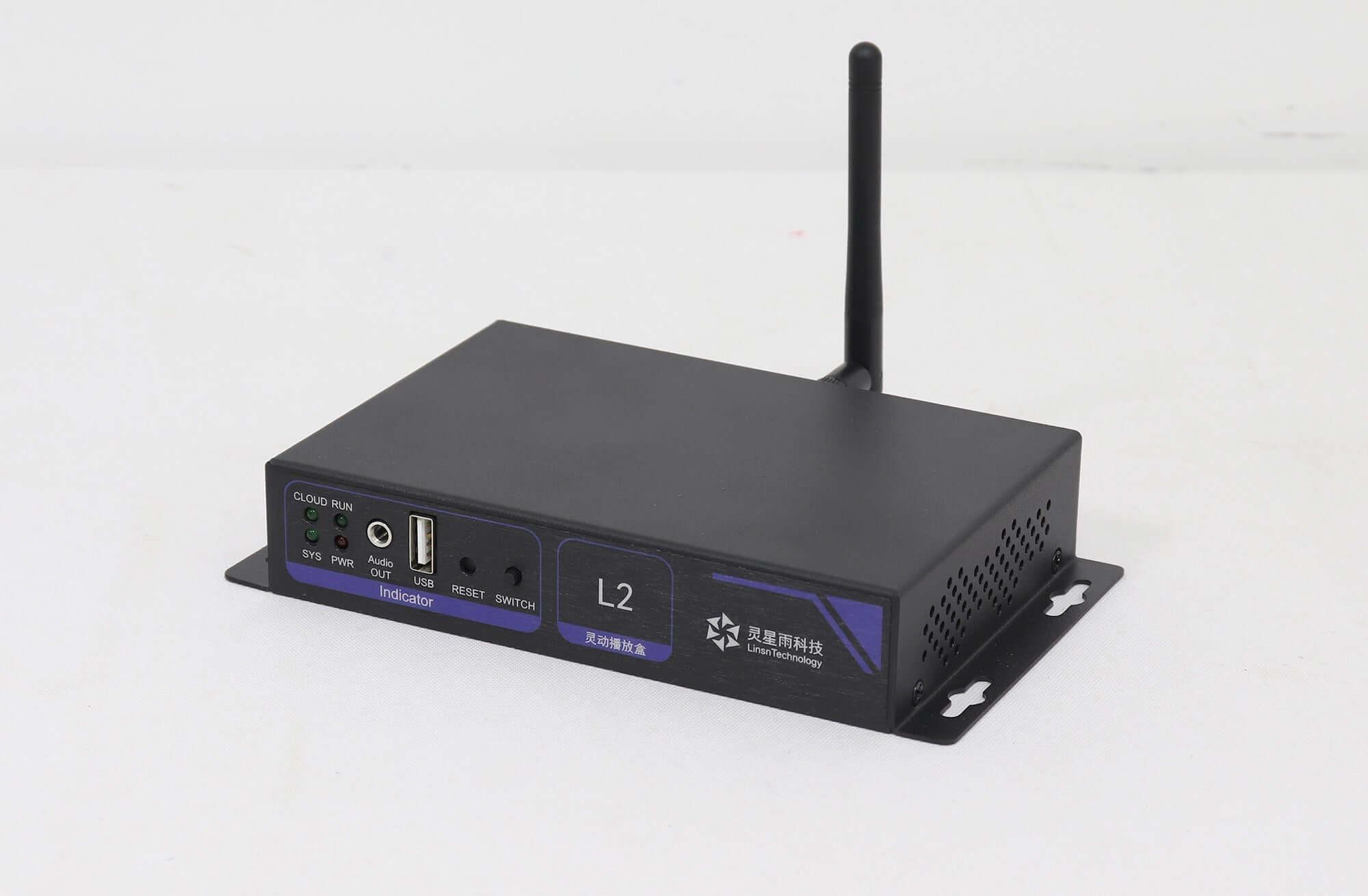
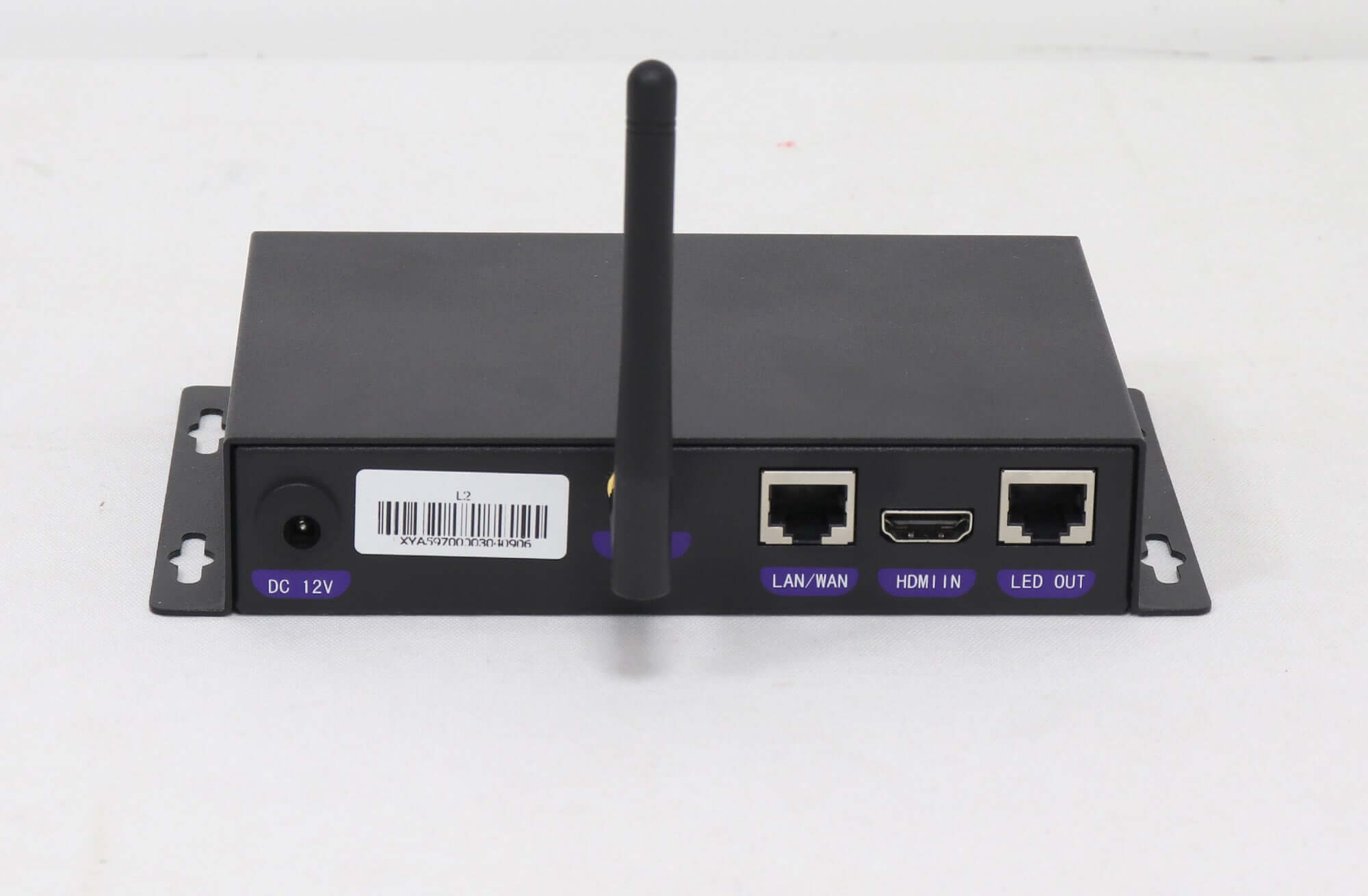
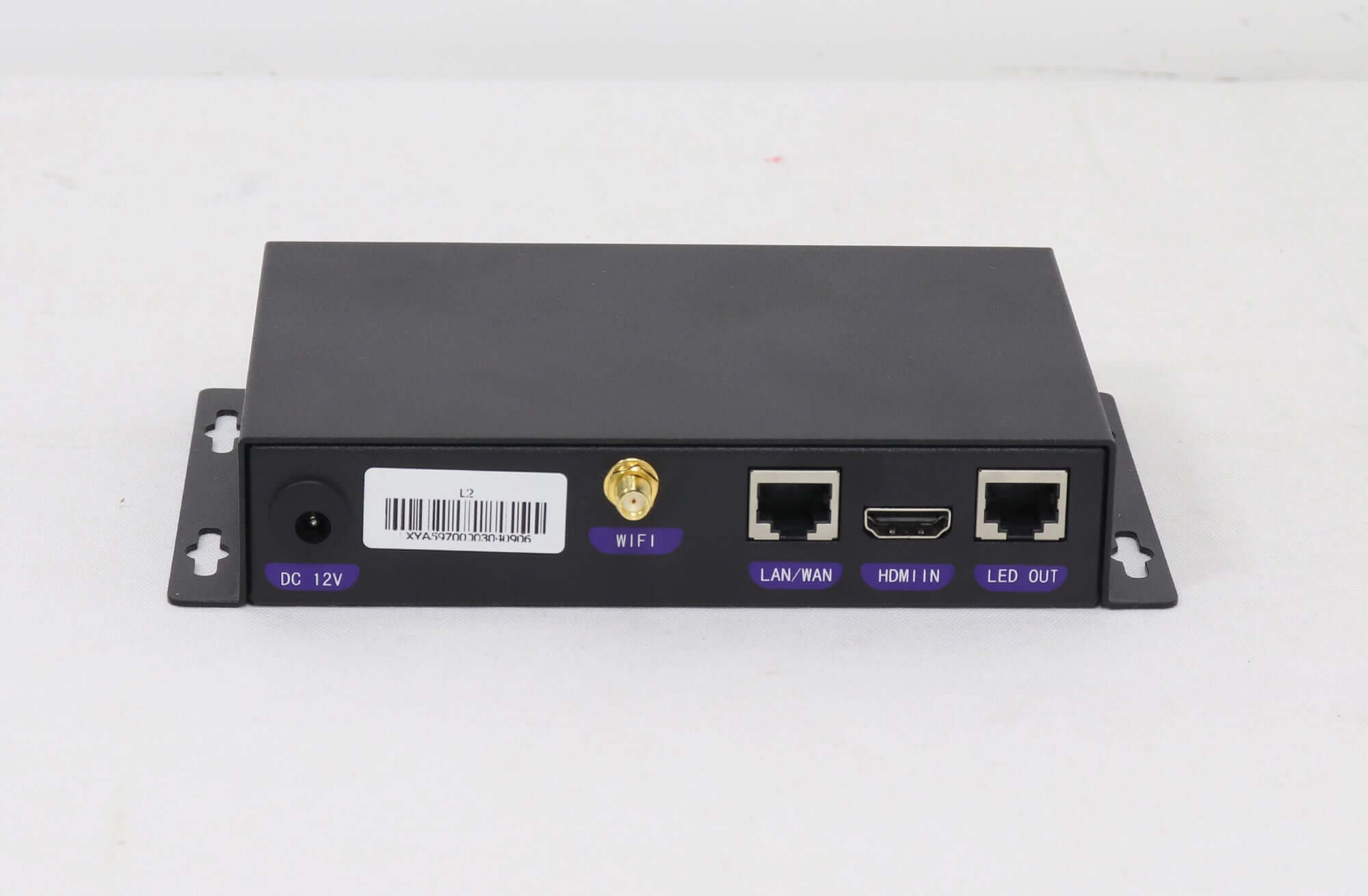
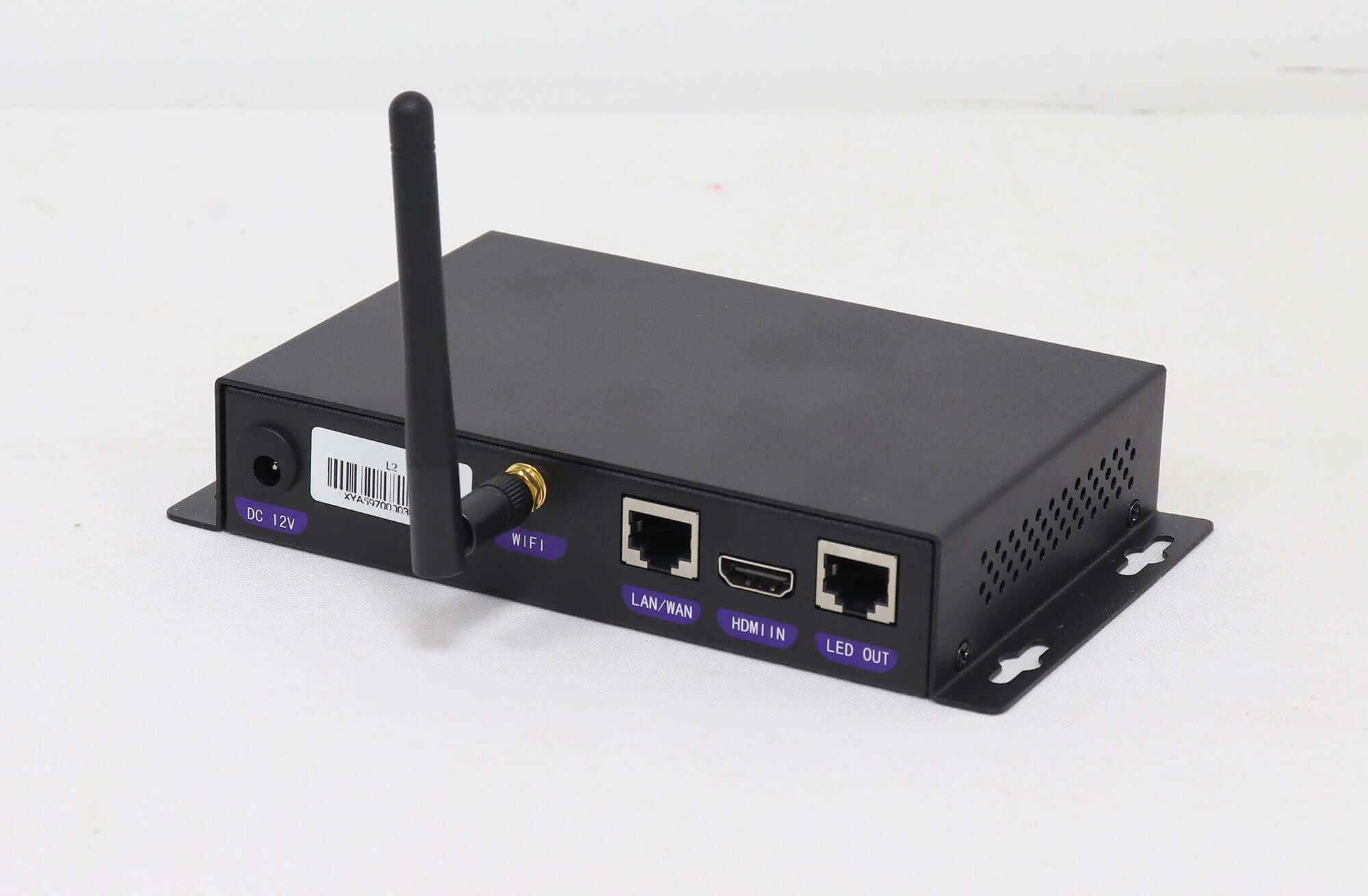
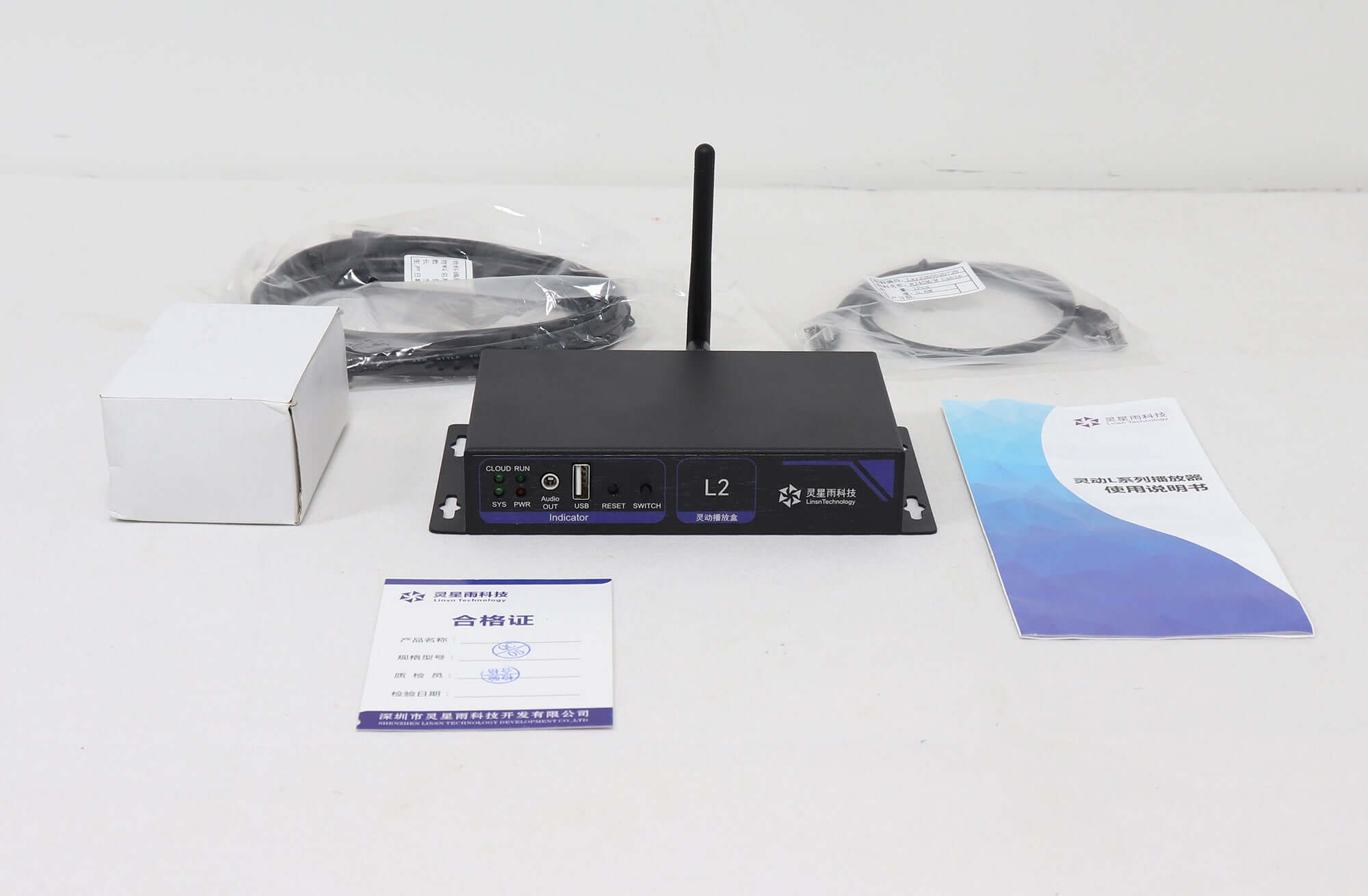
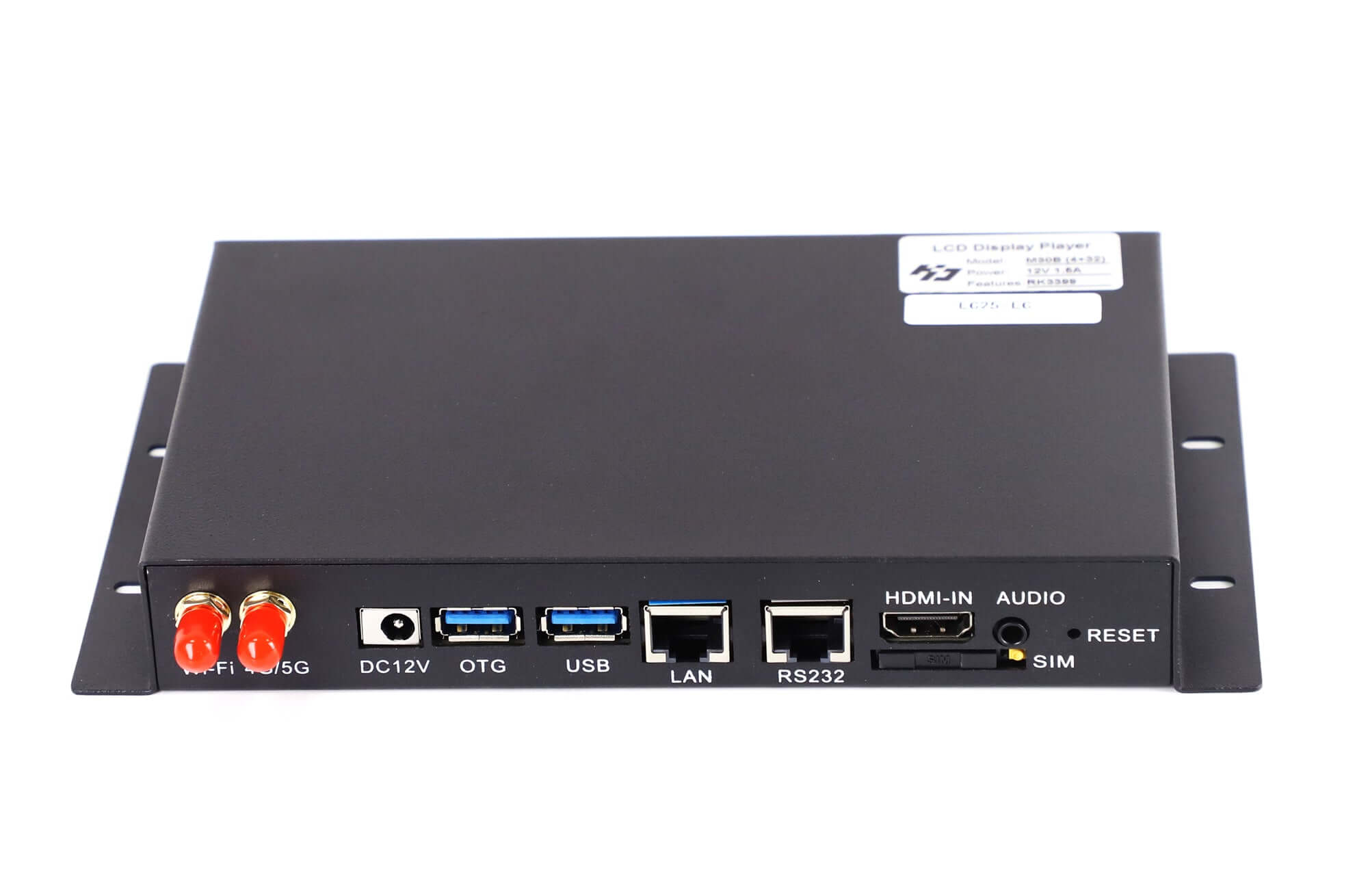
The Linsn L2 is a synchronous/asynchronous LED player for advertising displays with up to 650,000 pixels. Use HDMI input for synchronous display, or import programs through Wi-Fi, LAN, USB or a USB flash drive for playback. It also provides a 3.5 mm audio output and network-based screen setup.
Product specifications
| Parameter | Specification |
|---|---|
| Model / manual | L2; V2.1, March 2019 |
| Playback modes | Synchronous HDMI input; asynchronous program playback |
| Maximum LED load | 650,000 pixels |
| Maximum width / height | 1920 pixels horizontally or 1080 vertically, within total load |
| Program import | Wi-Fi, LAN, USB and USB flash drive |
| Scan modes | Static through 32 scan; real and virtual pixels |
| Grayscale | Up to 16-bit, 65,536 levels |
| Listed refresh limits | Up to 3840 Hz for scanning display; up to 6000 Hz for static display |
| Media categories | Video, images and animation; Word and database content listed |
| Audio output | 3.5 mm |
| Power input | DC 12 V |
| Power consumption | 15 W |
| Dimensions in original listing | 178 × 103 × 32 mm |
| Operating conditions | −20°C to +75°C; 0–95% humidity |
| Weight | 0.5 kg |
Choose synchronous or stored-content operation
Use HDMI when the display needs to follow an external video signal. Use imported content for a scheduled or stored-content installation. The specification lists multiple import methods but does not define every supported codec, so test your actual media before deployment.
The 1920-pixel width and 1080-pixel height are separate limits. They do not mean that a full 1920 × 1080 LED canvas fits within the 650,000-pixel capacity.
Refresh and grayscale values are maximum supported figures, not fixed results for every screen. Check the driver IC, scan mode and receiving-card configuration needed to meet the intended display performance.
Frequently asked questions
1. Can the Linsn L2 work in both synchronous and asynchronous modes?
Yes. HDMI input supports synchronous display, while programs can be imported through Wi-Fi, LAN, USB or USB flash drive for asynchronous use.
2. How many pixels can the L2 control?
The maximum stated load is 650,000 pixels. The 1920-pixel width and 1080-pixel height limits must be used within that total, not combined as a full 1080p LED output.
3. What refresh rates are listed for L2?
The manual lists up to 3840 Hz for scanning displays and up to 6000 Hz for static displays. Actual performance depends on the module and system configuration.
4. Does L2 have audio output and Wi-Fi?
Yes. The manual identifies a 3.5 mm audio output, a Wi-Fi antenna and a Wi-Fi/hotspot switch.
Download specification
| Weight | 2.5 kg |
|---|
Be the first to review “Linsn L2 Sync/Async LED Player | HDMI, Wi-Fi, 650K Pixels”
You must be logged in to post a review.
Will I be charged with customs and taxes?
The prices displayed on our site are tax-free (in US Dollars), which means you may be required to pay import duties and taxes once you receive your order. Import taxes, duties, and related customs fees will be determined by your local customs office when your order arrives at its final destination.
Please note that these additional charges and taxes are your responsibility, and we do not take any responsibility for them. We are not liable for paying or reimbursing any customs duties, taxes, or related fees. For more details on these charges, please contact your local customs office.
Shipping
We can ship to virtually any address in the world. Note that there are restrictions on some products, and some products cannot be shipped to international destinations..
When you place an order, we will estimate shipping and delivery dates for you based on the availability of your items and the shipping options you choose. Depending on the shipping provider you choose, shipping date estimates may appear on the shipping quotes page.
Please also note that the shipping rates for many items we sell are weight-based. The weight of any such item can be found on its detail page. To reflect the policies of the shipping companies we use, all weights will be rounded up to the next full pound..
Returns Policy
You may return most new, unopened items within 30 days of delivery for a full refund. We'll also pay the return shipping costs if the return is a result of our error (you received an incorrect or defective item, etc.)..
You should expect to receive your refund within four weeks of giving your package to the return shipper, however, in many cases you will receive a refund more quickly. This time period includes the transit time for us to receive your return from the shipper (5 to 10 business days), the time it takes us to process your return once we receive it (3 to 5 business days), and the time it takes your bank to process our refund request (5 to 10 business days).
If you need to return an item, simply login to your account, view the order using the "Complete Orders" link under the My Account menu and click the Return Item(s) button. We'll notify you via e-mail of your refund once we've received and processed the returned item..
Related products

Reviews
There are no reviews yet.