
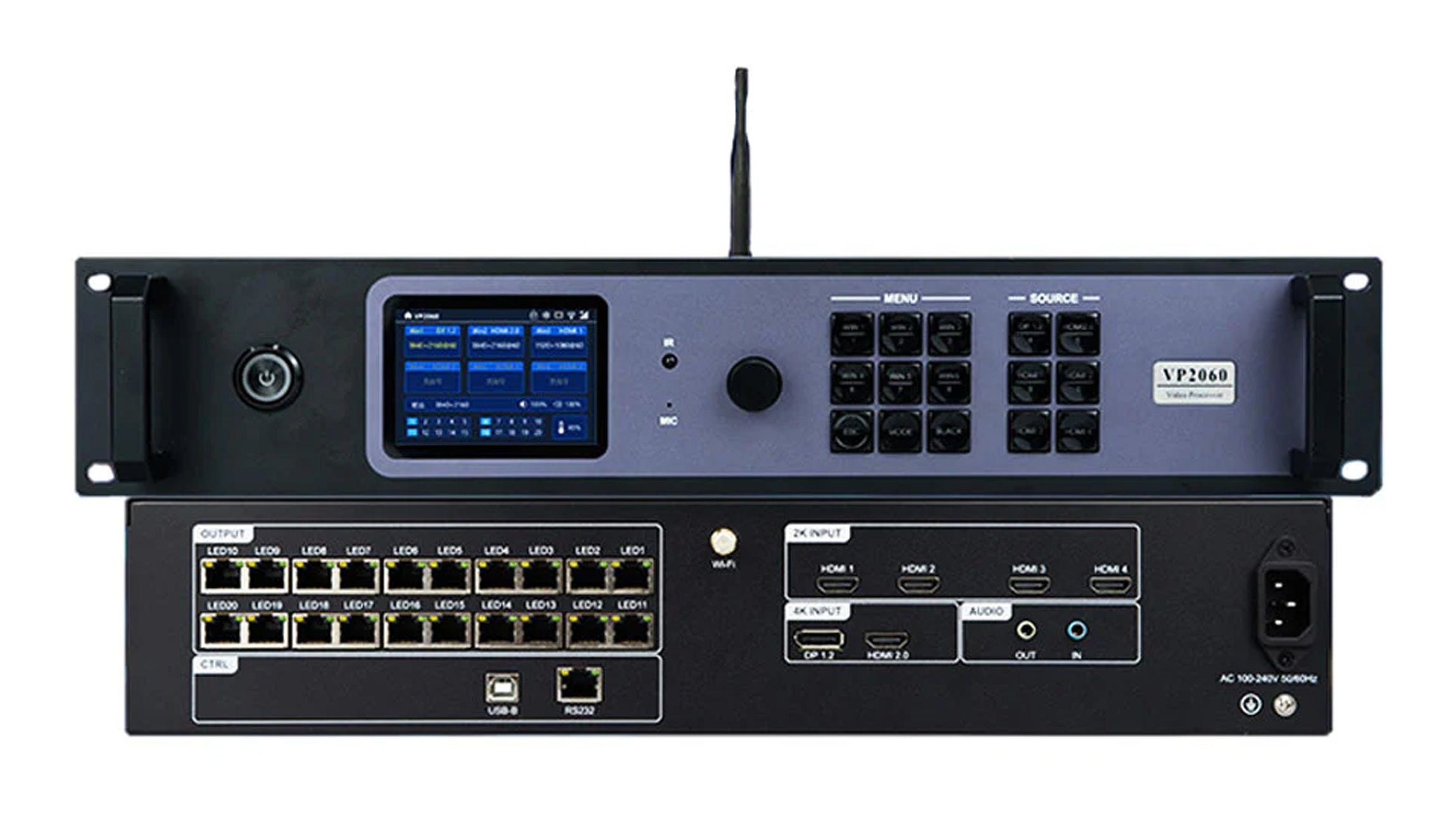
Huidu HD-VP2060 4K LED Video Processor – 20 Outputs
$ 1,189.00
The Huidu HD-VP2060 combines video processing and 20 Gigabit LED outputs. It offers HDMI 2.0 and DP 1.2 4K60 inputs, four HDMI 1.3 inputs, multi-window layouts and 16 scene presets. Check the documented capacity note before maximum-load planning.
999 in stock
HD-VP2060 4K LED video processor
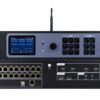
The Huidu HD-VP2060 integrates video processing and 20 Gigabit LED outputs in a 2U chassis. Six video connectors provide HDMI and DisplayPort source options, with multi-window layouts and 16 scene presets for repeatable display setups.
Match sources to the correct inputs
The HDMI 2.0 and DP 1.2 connectors accept up to 4096 × 2160 at 60 Hz. Four additional HDMI 1.3 inputs support up to 1920 × 1200 at 60 Hz. EDID management supports preset and customized input resolutions.
Arrange up to three 4K windows, two 4K plus four 2K windows, or six 2K windows. Source switching, cropping, scaling and point-to-point display support screen setup, while brightness controls, key lock and preset recall support operation.
HD-VP2060 specifications
| LED outputs | 20 Gigabit ports for receiving cards; 650,000 pixels per port in the interface table |
|---|---|
| Total loading stated in features | 13.1 million pixels; see capacity note below |
| Maximum screen dimensions | 16,384 pixels wide or 8,192 pixels high; separate limits within the verified loading configuration |
| 4K input connectors | 1 × DP 1.2 and 1 × HDMI 2.0; each 1920 × 1080 at 60 Hz minimum to 4096 × 2160 at 60 Hz maximum |
| Additional video inputs | 4 × HDMI 1.3; 800 × 600 at 60 Hz minimum to 1920 × 1200 at 60 Hz maximum |
| EDID | Preset and customized input resolution management |
| Window processing | 3 × 4K, 2 × 4K + 4 × 2K, or 6 × 2K layouts |
| Audio | HDMI/DP audio input; 1 × TRS 3.5 mm two-channel input and 1 × output |
| Scene presets | 16 presets with recall |
| Display controls | Source switching, cropping, scaling, brightness and key lock |
| Control ports | USB-B computer configuration; RJ45 RS232 central control; Wi-Fi antenna connection |
| Optional equipment | Infrared remote, RJ45-to-DB9 serial cable and 4G antenna connection as identified in the PDF |
| Power | AC 100–240 V, 50/60 Hz; 85 W |
| Chassis / dimensions / net weight | 2U; 482 × 88 × 297 mm (W × H × D); 5.2 kg |
| Operating conditions | −20 to 50°C; 20–90% RH, non-condensing |
Capacity note: The V1.0 feature list gives 13.1 million pixels, while the output table gives 650,000 pixels per port across 20 ports. These published values differ when combined; confirm maximum-load mapping for the actual hardware before installation. Neither the width nor height maximum should be combined into a full rectangular canvas without checking the total pixel load.
Frequently asked questions
How many HDMI inputs does the VP2060 have?
The detailed interface table lists four HDMI 1.3 inputs and one HDMI 2.0 input, plus one DP 1.2 input. The feature summary contains inconsistent “2-channel 2K” wording, but its own connector count and the detailed table both specify four HDMI 1.3 connectors.
Which inputs support 4K at 60 Hz?
Use the dedicated HDMI 2.0 or DP 1.2 input for up to 4096 × 2160 at 60 Hz. The four HDMI 1.3 inputs support up to 1920 × 1200 at 60 Hz each.
Can the processor display six 4K windows?
No such layout is listed. The specification gives three 4K windows, two 4K plus four 2K windows, or six 2K windows. Physical input count and window-processing capacity are separate limits.
Is the total LED load 13.1 million pixels?
The feature list states 13.1 million pixels, while the output table states 650,000 pixels per port for 20 ports. These figures are not numerically identical when combined. Confirm the supported total load and port mapping for the supplied unit before using a maximum-load design.
Can I control the VP2060 from a central control system?
Yes. The manual lists an RS232 control interface using an RJ45 connector. Its RJ45-to-DB9 cable is optional. USB-B is used for computer configuration, and the numbered Gigabit outputs connect to receiving cards.
Download specifications
Huidu HD-VP2060 two-in-one video processor specification (PDF)
| Weight | 4 kg |
|---|
Be the first to review “Huidu HD-VP2060 4K LED Video Processor – 20 Outputs”
You must be logged in to post a review.
Will I be charged with customs and taxes?
The prices displayed on our site are tax-free (in US Dollars), which means you may be required to pay import duties and taxes once you receive your order. Import taxes, duties, and related customs fees will be determined by your local customs office when your order arrives at its final destination.
Please note that these additional charges and taxes are your responsibility, and we do not take any responsibility for them. We are not liable for paying or reimbursing any customs duties, taxes, or related fees. For more details on these charges, please contact your local customs office.
Shipping
We can ship to virtually any address in the world. Note that there are restrictions on some products, and some products cannot be shipped to international destinations..
When you place an order, we will estimate shipping and delivery dates for you based on the availability of your items and the shipping options you choose. Depending on the shipping provider you choose, shipping date estimates may appear on the shipping quotes page.
Please also note that the shipping rates for many items we sell are weight-based. The weight of any such item can be found on its detail page. To reflect the policies of the shipping companies we use, all weights will be rounded up to the next full pound..
Returns Policy
You may return most new, unopened items within 30 days of delivery for a full refund. We'll also pay the return shipping costs if the return is a result of our error (you received an incorrect or defective item, etc.)..
You should expect to receive your refund within four weeks of giving your package to the return shipper, however, in many cases you will receive a refund more quickly. This time period includes the transit time for us to receive your return from the shipper (5 to 10 business days), the time it takes us to process your return once we receive it (3 to 5 business days), and the time it takes your bank to process our refund request (5 to 10 business days).
If you need to return an item, simply login to your account, view the order using the "Complete Orders" link under the My Account menu and click the Return Item(s) button. We'll notify you via e-mail of your refund once we've received and processed the returned item..
Related products

Reviews
There are no reviews yet.